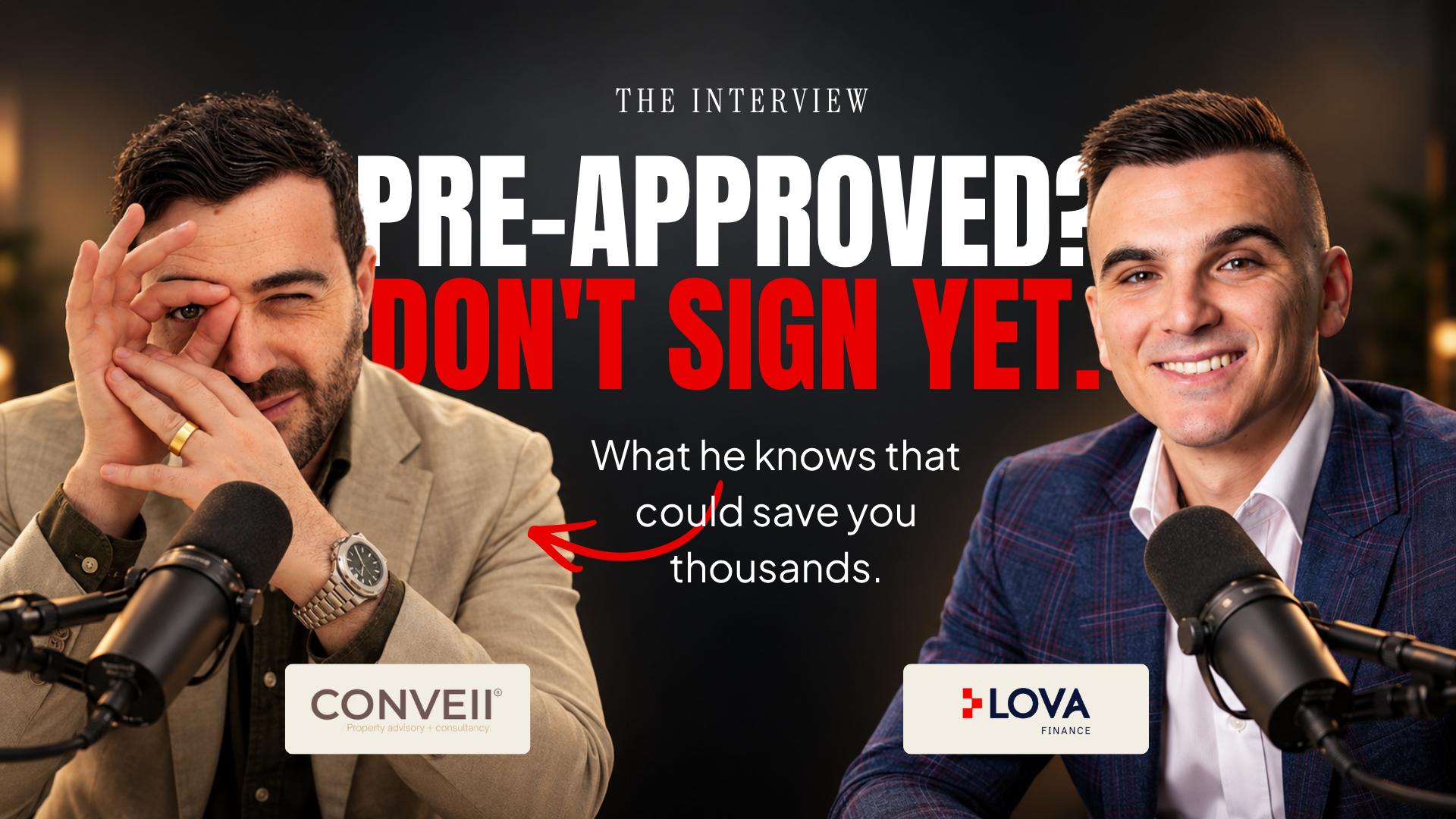
Working headline: Your home loan is pre-approved. So why might a conveyancer still tell you not to sign?
Interview focus: The legal risks NSW property buyers often overlook, and why having the right mortgage broker and conveyancer involved at the right time can make a difference.
1. A buyer has pre-approval. Are they actually ready to sign?
Let’s imagine a buyer has found their dream property, their offer has been accepted, and their mortgage broker has arranged pre-approval.
What’s the first thing you’d want them to understand before they sign the contract?
My clients need to understand the contract they are signing, particularly for the biggest purchase they are ever likely to make. I thoroughly review contracts, negotiate changes to contract terms and then give my clients detailed legal advice.
Are there situations where having pre-approval gives buyers a false sense of security?
Generally, having pre-approval is a good indicator of your borrowing power, provided there are no major changes to the property market, interest rates or your income. It’s important to note that the bank will generally only lend a percentage of what they value the property for – not what you pay for it.
2. What are the red flags buyers don’t know to look for?
When you’re reviewing a contract, what are the biggest warning signs that an ordinary buyer might completely overlook?
A major warning sign is a mismatch between what’s been advertised by the agent and what the contract says is included, particularly when it comes to inclusions.
A check for easements or restrictions and the location of a sewer line often affects future development of a property.
The zoning of the land can severely impact the access and cost of insurance on the property, and much of Wollongong is flood affected. I encourage my clients to obtain insurance quotes before signing a contract, so they understand the ongoing costs and any exclusions that could leave them exposed.
Are there particular clauses or property-related issues that would make you advise somebody to reconsider a purchase?
The findings in a strata report and/or a pest and building report is one of the biggest reasons my clients walk away from a property, even after their offer is accepted or during the cooling off period.
Land tax adjustment clauses and GST clauses can greatly affect the cost of the property and so I always try to negotiate these clauses out of contracts.
3. Have you ever advised someone to walk away from a property?
Without sharing any confidential information, can you describe a situation where a contract review uncovered something serious enough to change a buyer’s decision?
I often encourage clients to walk away from properties where there are works done without council or strata approval or completed by the owner themselves, as these often present unnecessary risks.
What did you identify, and what could have happened if the buyer had proceeded? A hypothetical or composite example is also welcome.
I had a client who had an offer accepted on a strata property. I advised him to purchase a different property after the vendor was unable to provide any certificates for any of the works completed and none of the works were strata approved. This presented several potential risks for him e.g if the waterproofing failed in the bathroom. In that instance, my client walked away as the vendor was not willing to reduce the sale price to reflect my client’s potential risk.
4. What should buyers do when an agent pressures them to sign?
In a competitive property market, buyers can feel enormous pressure to exchange contracts quickly.
What would you say to someone who has been told they need to sign immediately or risk losing the property?
Never sign a contract without getting proper legal advice from CONVEII first. Its important to remember that the agent works for the owner and will often attempt to use this highly emotional and stressful time to their advantage.
What should they understand about cooling-off periods, auctions and Section 66W certificates in NSW?
A cooling-off period is a window of 5 business days after contracts are exchanged during which a buyer can legally back out of the property purchase if they change their mind or fail to secure final finance approval.
If you choose to rescind the contract during this cooling-off period, you will forfeit 0.25% of the total purchase price from your deposit to the seller, and the remaining balance of your deposit will be refunded to you.
There is no cooling-off period if you buy at an auction.
A 66w certificate can only be issued by a solicitor or conveyancer, to the effect of waiving a cooling off period.
5. Where do mortgage brokers and conveyancers need to work together?
At what point in the buying process should a buyer engage their conveyancer?
As soon as you are considering buying property, you should contact me. I provide my clients with guidance on the entire process, assistance with making offers and how to deal with real estate agents.
What are the most common problems you’ve seen when finance arrangements and contractual obligations aren’t properly coordinated?
Clients often need to get bridging finance if they buy before they sell. To avoid this, I encourage my clients to negotiate simultaneous settlements, so they complete their sale and purchase on the same day.
A delay in getting formal loan approval often requires negotiations to extend the cooling off period. Although this is usually agreed to, the vendor’s solicitor may charge the purchaser for the time taken to obtain instructions from their client.
And what could the mortgage broker and conveyancer do differently to make things easier for the buyer?
The communication between the broker and conveyancer is vital, to make sure formal loan approval is granted before the cooling off period expires and any extensions are negotiated if any delay is anticipated.
6. What’s hiding behind a beautiful property?
A freshly renovated house or apartment can look perfect at an inspection.
What are some of the problems that might only emerge from reviewing the contract, conducting searches or examining strata records?
A strata report might reveal issues such as an expensive strata loan, a history of special levies being raised, expensive litigation with the builder, or water penetration.
A pest and building report might reveal issues such as concrete cancer, termite damage, water penetration, rotting timbers, combustible cladding, blocked or broken pipes, and rubbish stored under the house.
The contract might expose restrictive covenants and easements including responsibilities to maintain areas, keep certain parts of the property clear and restrict development.
Are there particular red flags that concern you when buying apartments in Wollongong or elsewhere in NSW?
Apart from issues in the strata report, there may also be issues with unpleasant neighbours and stricter requirements to do renovations/repairs.
Off the plan purchases (including apartments) are inherently riskier than existing property. The contract terms are heavily skewed to the developer, so its important to get clear detailed legal advice from someone with extensive experience with off-the-plan purchases. I have completed over 30+ off the plan development sites for developers, and reviewed thousands of contracts for purchasers, so I know what to look for.
If you are buying an apartment in Wollongong or the Illawarra, contact CONVEII today.
7. Can a good conveyancer actually save buyers money?
Beyond completing the legal paperwork, are there opportunities to negotiate contract terms or resolve issues in ways that materially benefit the buyer?
Absolutely – you should always invest in the best advice you can get for the most expensive decision you will ever make.
I work with a select number of clients at a time to ensure I can provide a high level of service. This enables me to take the time to consider my client’s position and secure them a better deal.
There’s much more to negotiation than just the price on the front page.
I regularly have clients ask me to take over their matters from their original conveyancer because they were too slow to respond, provided basic advice and didn’t give the service they needed.
Can you give an example of where careful negotiation made a difference?
My clients had their offer accepted on an apartment however some major issues came up in the pest and building report.
I advised my clients to reduce their offer by $25,000, relying on the issues identified in the pest and building report, while also setting a short deadline for acceptance from the vendor.
At worst, the vendor would reject the revised offer.
Nonetheless, the vendor accepted and they saved $25,000, which would have taken a long time to save up otherwise.
Using CONVEII can often save you more money than if you used a cheaper conveyancing service.
8. If you were buying a property tomorrow, what would you do differently?
Knowing everything you know now, what would you personally investigate, question or negotiate before buying a property?
I would always organise a pest & building report + a strata report (if purchasing a strata property) to get an understanding of what I am buying into. The most important part of buying a property is the due diligence.
I would always consider quality and service over price when choosing who will provide me with legal advice. I regularly save my clients money in the short term, reduce their risk to save them money and stress in the long term and help them make an informed decision.
Great service means getting answers quickly, being updated along the way and knowing someone is available when you need them. I regularly have buyers plead with me to take over their purchase from other firms because they simply can’t get a response. Buying property is already an emotional and stressful process — premium service means being accessible, responsive and proactive, so clients aren’t left wondering what’s happening or chasing for answers
Great legal negotiating usually means better contract terms that might include settlement timing that works to your schedule, reduced risk with a reduced deposit, lower costs if settlement is delayed and getting rental income sooner.
Shopping for a conveyancer should never be about finding the cheapest option — there are far more important factors to consider, including availability, direct access to the principal, experience, responsiveness, attention to detail and the quality of advice you receive throughout the transaction. This is what CONVEII is about.
What’s something you would never agree to without further investigation?
I would never agree to sign a contract to buy a property for fear of missing out and pressure from an agent. The most expensive purchase of your life deserves proper due diligence before you sign the contract.
9. What does personal and responsive conveyancing really mean?
The Illawarra Mercury recently featured Conveii’s personal and responsive approach to conveyancing.
In practical terms, what does that look like during a property purchase?
To me, personal and responsive conveyancing means providing a level of service that goes well beyond what clients might ordinarily expect. Every client has direct access to me, including outside standard business hours, receives prompt responses to their enquiries and is kept informed throughout the process. Buying property can be stressful and emotional, so I place enormous importance on making my clients feel supported, reassured and confident that their purchase is being personally looked after.
When a buyer is under pressure, how much difference can it make to have direct access to the professional handling their transaction?
It can make an enormous difference. Buying property is often stressful and time-sensitive, and having direct access to the person handling your purchase provides reassurance, reduces anxiety and gives you confidence that your interests are being personally looked after. Responsiveness and availability is often the difference between securing your dream property and missing out to another buyer, particularly in a competitive market where timing is critical. Using my services will give you a competitive edge.
Reference:[ https:
10. What’s the one question every buyer should ask?
What’s the single most important question you wish every NSW homebuyer would ask their conveyancer before signing a contract?
I’d want every buyer to ask, “If you were buying this property yourself, is there anything you’d want changed or investigated before signing?” It’s a simple question, but it encourages a more meaningful conversation about the risks, potential costs and issues that might not be obvious to someone buying a property.
And what’s your advice to first-home buyers who are frightened of missing out on the property they want?
I always remind first-home buyers that missing out on a property is disappointing, but buying the wrong property can be far more costly. I understand how competitive the market can be, which is why I prioritise acting quickly to give my clients every possible advantage over other buyers. However, speed should never come at the expense of proper due diligence, and I would never encourage a client to sign a contract simply out of fear of missing out.
I recently had buyers contact me urgently after signing a contract a few days earlier, having struggled to get responses from their existing conveyancer. I immediately helped them arrange the transfer of their file, including assisting with the correspondence to their previous conveyancer, and liaised directly with the selling agent and mortgage broker to ensure everything was progressing. Within a few hours, I had reviewed the contract, negotiated changes to the contract terms and provided detailed written advice covering 18 separate items. The buyers were incredibly grateful, and what had started as an overwhelming and stressful experience became one where they finally felt reassured, supported and confident that their purchase was in good hands.
For tailored advice and proper guidance, contact CONVEII today.